



Men considering male breast reduction usually want a clear answer first: male breast reduction is a surgical procedure that removes excess fat, glandular breast tissue, or both to create a flatter, more defined male chest.
Gynecomastia can involve excess fat, glandular tissue, or a combination of both. If your chest has not improved with diet or exercise, surgery may be the most direct way to create a more proportional, natural-looking contour and improve comfort and confidence.

At Iconic Plastic Surgery in Carlsbad, California, male breast reduction is customized based on the amount of fat, glandular tissue, and excess skin present, and patients benefit from the practice’s specialized cosmetic surgery facilities in Carlsbad. Depending on your anatomy, treatment may involve liposuction, direct tissue removal, or both.
If you are comparing surgical options for enlarged male breast tissue, it helps to know what happens after the procedure as well as during it. Below, you will learn how male breast reduction is performed, what recovery is like, when to wear compression, when exercise can resume, what results and scarring to expect, and whether the outcome is permanent.
What Happens During Gynecomastia Surgery?
Male breast reduction surgery is a form of breast reduction surgery for gynecomastia, also called reduction mammaplasty, that reduces excess tissue and improves chest contour as an effective treatment.
The surgical approach depends on what is causing the fullness.
If excess fat is the main concern, liposuction may be used to remove unwanted fat and reshape the chest. If true gynecomastia is present, breast gland tissue may need direct male breast tissue removal.
Many patients have both fat and glandular tissue, so a combination approach may produce the best contour.
Lifestyle changes may help pseudogynecomastia, while medication can help early-stage cases but is less effective once tissue becomes fibrous.
The outpatient gynecomastia surgery procedure usually takes about one to two hours and is commonly performed under general anesthesia.
Once the excess tissue is removed, the healing process begins.
The First Few Days After Surgery
Your chest will not look like the final result immediately after surgery.
Swelling, soreness, bruising, and pain are normal during the first several days, and these symptoms are typically manageable. Dressings may be placed over the incisions, and some patients may need temporary drains to prevent fluid buildup.
A compression garment is also commonly used to control swelling and support the new chest contour.
During this early stage, the first few weeks are focused on rest, wearing the compression garment, avoiding heavy lifting, and watching for complications as instructed by your surgeon. Although you may notice an immediate reduction in chest fullness, swelling can temporarily hide some of the definition created during surgery, and many men return to work within a few days if their job is not physically demanding.
The First One to Two Weeks
Many adult men begin feeling significantly better within the typical 1–2 week recovery window after gynecomastia surgery.
Bruising and discomfort should gradually improve, and adult men recovering from surgery for enlarged male breasts may be able to return to desk-based work relatively quickly. Jobs that involve heavy lifting or physical activity usually require more recovery time.
You will also continue wearing your compression garment as directed.
Even if you feel well, it is important not to rush back into strenuous activity. The tissues beneath the skin are still healing.
Why Compression Matters
After male breast tissue removal, the skin and underlying tissues need time to adapt to the new chest shape.
A compression vest helps reduce swelling and supports the treated area during this process.
Patients are often instructed to wear compression for several weeks, although the exact timeline depends on the extent of surgery and how the chest is healing.
Following these instructions may help the chest settle more smoothly as swelling decreases.
When Can You Return to Exercise?
Getting back to the gym is a common concern for male breast reduction patients.
Light walking is generally encouraged during recovery, but strenuous exercise must be temporarily limited, and many men also use exercise and gynecomastia-focused workouts as part of their long-term plan to maintain chest contour.
Activities that heavily engage the chest, shoulders, and upper body usually require more time before they can be resumed safely.
Your surgeon will let you know when you can return to weight training, running, sports, and other forms of exercise based on your individual recovery.
Returning too soon can increase swelling or place unnecessary stress on healing tissues, so it is important to follow your postoperative plan instead of relying on a fixed timeline, as doing so may also raise risks such as bleeding, infection, or changes in sensation during healing.
When Will You See Male Breast Reduction Results?
Gynecomastia surgery is an effective treatment for enlarged breasts caused by gynecomastia, and one benefit is that the change in chest size is visible immediately.
Once excess fat and glandular tissue have been removed, the breasts are already flatter than they were before surgery.
However, your early appearance is not your final result.
Swelling can temporarily make the chest look fuller, less defined, or slightly uneven. As the swelling decreases, the contour becomes clearer.
Most patients notice continued improvement over the following weeks and months as the chest settles and the tissues heal.
This is why male breast reduction results should be evaluated gradually rather than judged during the first few days after surgery. Optimal results are typically visible by about 6 months as swelling resolves and the chest settles.
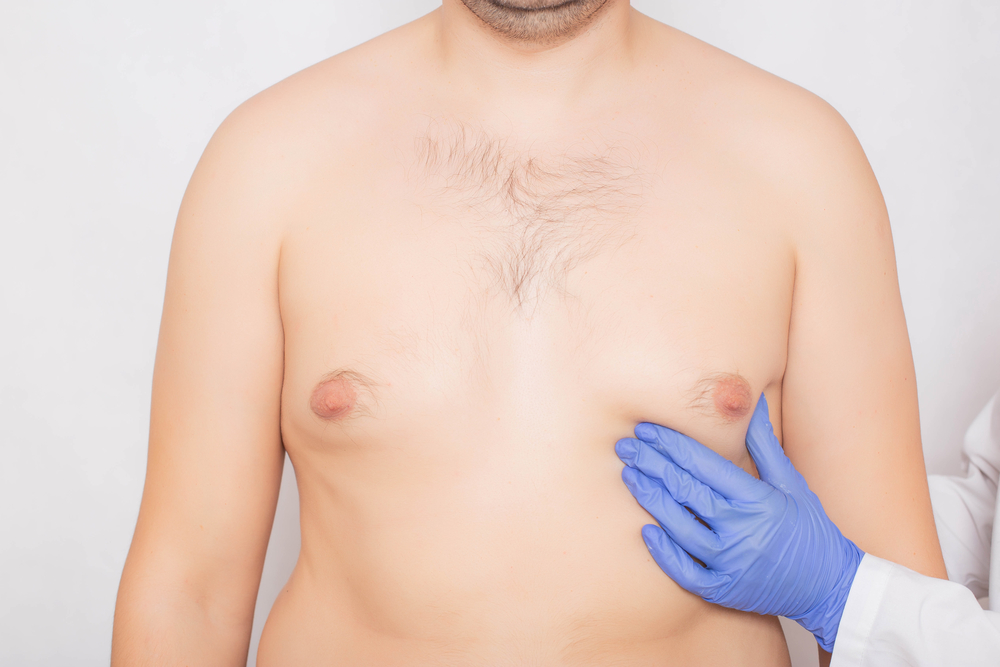

What Should the Final Chest Contour Look Like?
The goal of male breast reduction is not simply to make the chest smaller, but to create a flatter chest with a masculine contour.
A well-planned procedure should improve overall proportion and create a more natural chest contour.
For patients with glandular gynecomastia, direct tissue removal can reduce the firm fullness beneath or around the nipple. If excess fat is also present, liposuction can help smooth the surrounding area and improve definition, though in severe cases with excess breast tissue or excess skin, more than liposuction alone may be needed to achieve excellent results.
For many men, successful treatment also improves emotional discomfort and self confidence.
Your final result will depend on several factors, including:
- The amount of fat and glandular tissue present
- Whether liposuction, excision, or both were performed
- Skin elasticity
- The amount of excess skin
- Your natural anatomy
- How your body heals
- How closely you follow postoperative instructions
Gynecomastia surgery has high satisfaction, with success and patient satisfaction rates reported above 90%.
The goal should always be a chest contour that looks balanced with your individual body.
What About Scars?
Scarring is unavoidable whenever surgery requires an incision, but surgeons place incisions strategically whenever possible and aim to use small incisions whenever anatomy and technique allow.
For glandular tissue removal, an incision may often be positioned around the border of the areola, where the natural color transition can help make the scar less noticeable, even in patients with dark skin.
Severe cases involving excess breast tissue, excess skin, or stretched areola tissue may require additional incisions.
Scars also improve with time. Early scars may appear pink, dark, or raised before gradually softening and fading.
Following your surgeon’s recommendations for scar care and sun protection can support the healing process.
Are Male Breast Reduction Results Permanent?
Male breast reduction results are generally long lasting.
The fat and glandular tissue removed during surgery do not simply grow back. However, the appearance of the chest can still change in the future.
Significant weight gain, hormonal changes, obesity, certain medications, drugs, aging, or other factors associated with gynecomastia may affect chest contour over time.
Maintaining a relatively stable weight and discussing potential causes of gynecomastia with your physician can help protect your results; persistent recurrence concerns should also be reviewed with a physician for possible underlying medical causes.
Every Recovery Time Is Different
Although general recovery timelines are helpful, no two patients heal exactly the same way.
Plastic surgeons may see patients ranging from liposuction-only cases to those needing direct excision of breast gland tissue, and recovery can differ accordingly. More extensive cases may require additional healing time.
Age, overall health, surgical technique, occupation, and activity level also influence recovery. Gynecomastia is common, affecting up to 50% of men in the U.S. during their lifetime.
Follow-up appointments are important because they allow your surgeon to evaluate your healing and guide decisions about exercise, compression, scar care, and returning to normal activities.
Male Breast Reduction at Iconic Plastic Surgery
If enlarged male breasts have not improved with changes in diet, exercise, or body composition, male breast reduction may provide an effective treatment when conservative measures have not worked.
At Iconic Plastic Surgery, gynecomastia surgery is customized based on the type and amount of tissue present. Cosmetic surgery outcomes depend on expertise, so consultations with board-certified plastic surgeons are recommended for gynecomastia treatment. Treatment may involve liposuction, male breast tissue removal, or a combination of techniques to create a flatter and more proportionate chest.
Discuss your goals, concerns, and medical history during the consultation. Choose a board-certified plastic surgeon for safety, and evaluate the surgeon’s training and experience with liposuction techniques and excision.
While the reduction in chest fullness is visible immediately, swelling takes time to resolve. The best male breast reduction results develop gradually as the chest heals and settles into its new contour.
Schedule a private consultation with Iconic Plastic Surgery to learn whether male breast reduction is right for you and what to expect from your personalized surgery, recovery, and results.


