

Category Archives: Breast Reduction

Understanding Male Breast Reduction Recovery and Results

Men considering male breast reduction usually want a clear answer first: male breast reduction is a surgical procedure that removes excess fat, glandular breast tissue, or both to create a flatter, more defined male chest.

Gynecomastia can involve excess fat, glandular tissue, or a combination of both. If your chest has not improved with diet or exercise, surgery may be the most direct way to create a more proportional, natural-looking contour and improve comfort and confidence.

At Iconic Plastic Surgery in Carlsbad, California, male breast reduction is customized based on the amount of fat, glandular tissue, and excess skin present, and patients benefit from the practice’s specialized cosmetic surgery facilities in Carlsbad. Depending on your anatomy, treatment may involve liposuction, direct tissue removal, or both.

If you are comparing surgical options for enlarged male breast tissue, it helps to know what happens after the procedure as well as during it. Below, you will learn how male breast reduction is performed, what recovery is like, when to wear compression, when exercise can resume, what results and scarring to expect, and whether the outcome is permanent.

What Happens During Gynecomastia Surgery?

Male breast reduction surgery is a form of breast reduction surgery for gynecomastia, also called reduction mammaplasty, that reduces excess tissue and improves chest contour as an effective treatment.

The surgical approach depends on what is causing the fullness.

If excess fat is the main concern, liposuction may be used to remove unwanted fat and reshape the chest. If true gynecomastia is present, breast gland tissue may need direct male breast tissue removal.

Many patients have both fat and glandular tissue, so a combination approach may produce the best contour.

Lifestyle changes may help pseudogynecomastia, while medication can help early-stage cases but is less effective once tissue becomes fibrous.

The outpatient gynecomastia surgery procedure usually takes about one to two hours and is commonly performed under general anesthesia.

Once the excess tissue is removed, the healing process begins.

The First Few Days After Surgery

Your chest will not look like the final result immediately after surgery.

Swelling, soreness, bruising, and pain are normal during the first several days, and these symptoms are typically manageable. Dressings may be placed over the incisions, and some patients may need temporary drains to prevent fluid buildup.

A compression garment is also commonly used to control swelling and support the new chest contour.

During this early stage, the first few weeks are focused on rest, wearing the compression garment, avoiding heavy lifting, and watching for complications as instructed by your surgeon. Although you may notice an immediate reduction in chest fullness, swelling can temporarily hide some of the definition created during surgery, and many men return to work within a few days if their job is not physically demanding.

The First One to Two Weeks

Many adult men begin feeling significantly better within the typical 1–2 week recovery window after gynecomastia surgery.

Bruising and discomfort should gradually improve, and adult men recovering from surgery for enlarged male breasts may be able to return to desk-based work relatively quickly. Jobs that involve heavy lifting or physical activity usually require more recovery time.

You will also continue wearing your compression garment as directed.

Even if you feel well, it is important not to rush back into strenuous activity. The tissues beneath the skin are still healing.

Why Compression Matters

After male breast tissue removal, the skin and underlying tissues need time to adapt to the new chest shape.

A compression vest helps reduce swelling and supports the treated area during this process.

Patients are often instructed to wear compression for several weeks, although the exact timeline depends on the extent of surgery and how the chest is healing.

Following these instructions may help the chest settle more smoothly as swelling decreases.

When Can You Return to Exercise?

Getting back to the gym is a common concern for male breast reduction patients.

Light walking is generally encouraged during recovery, but strenuous exercise must be temporarily limited, and many men also use exercise and gynecomastia-focused workouts as part of their long-term plan to maintain chest contour.

Activities that heavily engage the chest, shoulders, and upper body usually require more time before they can be resumed safely.

Your surgeon will let you know when you can return to weight training, running, sports, and other forms of exercise based on your individual recovery.

Returning too soon can increase swelling or place unnecessary stress on healing tissues, so it is important to follow your postoperative plan instead of relying on a fixed timeline, as doing so may also raise risks such as bleeding, infection, or changes in sensation during healing.

When Will You See Male Breast Reduction Results?

Gynecomastia surgery is an effective treatment for enlarged breasts caused by gynecomastia, and one benefit is that the change in chest size is visible immediately.

Once excess fat and glandular tissue have been removed, the breasts are already flatter than they were before surgery.

However, your early appearance is not your final result.

Swelling can temporarily make the chest look fuller, less defined, or slightly uneven. As the swelling decreases, the contour becomes clearer.

Most patients notice continued improvement over the following weeks and months as the chest settles and the tissues heal.

This is why male breast reduction results should be evaluated gradually rather than judged during the first few days after surgery. Optimal results are typically visible by about 6 months as swelling resolves and the chest settles.
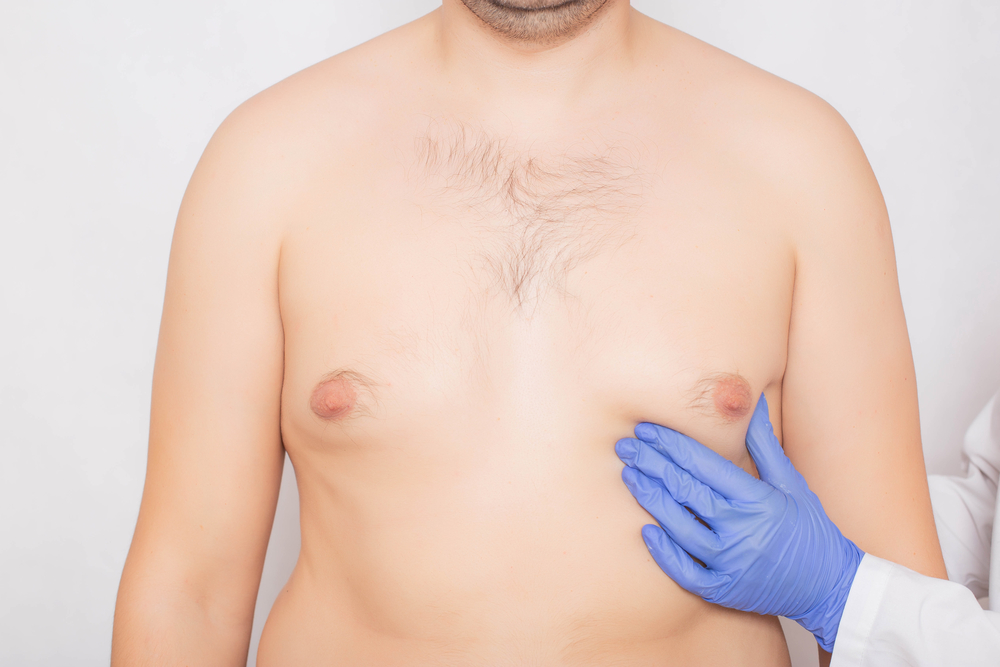
What Should the Final Chest Contour Look Like?

The goal of male breast reduction is not simply to make the chest smaller, but to create a flatter chest with a masculine contour.

A well-planned procedure should improve overall proportion and create a more natural chest contour.

For patients with glandular gynecomastia, direct tissue removal can reduce the firm fullness beneath or around the nipple. If excess fat is also present, liposuction can help smooth the surrounding area and improve definition, though in severe cases with excess breast tissue or excess skin, more than liposuction alone may be needed to achieve excellent results.

For many men, successful treatment also improves emotional discomfort and self confidence.

Your final result will depend on several factors, including:

  • The amount of fat and glandular tissue present
  • Whether liposuction, excision, or both were performed
  • Skin elasticity
  • The amount of excess skin
  • Your natural anatomy
  • How your body heals
  • How closely you follow postoperative instructions

Gynecomastia surgery has high satisfaction, with success and patient satisfaction rates reported above 90%.

The goal should always be a chest contour that looks balanced with your individual body.

What About Scars?

Scarring is unavoidable whenever surgery requires an incision, but surgeons place incisions strategically whenever possible and aim to use small incisions whenever anatomy and technique allow.

For glandular tissue removal, an incision may often be positioned around the border of the areola, where the natural color transition can help make the scar less noticeable, even in patients with dark skin.

Severe cases involving excess breast tissue, excess skin, or stretched areola tissue may require additional incisions.

Scars also improve with time. Early scars may appear pink, dark, or raised before gradually softening and fading.

Following your surgeon’s recommendations for scar care and sun protection can support the healing process.

Are Male Breast Reduction Results Permanent?

Male breast reduction results are generally long lasting.

The fat and glandular tissue removed during surgery do not simply grow back. However, the appearance of the chest can still change in the future.

Significant weight gain, hormonal changes, obesity, certain medications, drugs, aging, or other factors associated with gynecomastia may affect chest contour over time.

Maintaining a relatively stable weight and discussing potential causes of gynecomastia with your physician can help protect your results; persistent recurrence concerns should also be reviewed with a physician for possible underlying medical causes.

Every Recovery Time Is Different

Although general recovery timelines are helpful, no two patients heal exactly the same way.

Plastic surgeons may see patients ranging from liposuction-only cases to those needing direct excision of breast gland tissue, and recovery can differ accordingly. More extensive cases may require additional healing time.

Age, overall health, surgical technique, occupation, and activity level also influence recovery. Gynecomastia is common, affecting up to 50% of men in the U.S. during their lifetime.

Follow-up appointments are important because they allow your surgeon to evaluate your healing and guide decisions about exercise, compression, scar care, and returning to normal activities.

Male Breast Reduction at Iconic Plastic Surgery

If enlarged male breasts have not improved with changes in diet, exercise, or body composition, male breast reduction may provide an effective treatment when conservative measures have not worked.

At Iconic Plastic Surgery, gynecomastia surgery is customized based on the type and amount of tissue present. Cosmetic surgery outcomes depend on expertise, so consultations with board-certified plastic surgeons are recommended for gynecomastia treatment. Treatment may involve liposuction, male breast tissue removal, or a combination of techniques to create a flatter and more proportionate chest.

Discuss your goals, concerns, and medical history during the consultation. Choose a board-certified plastic surgeon for safety, and evaluate the surgeon’s training and experience with liposuction techniques and excision.

While the reduction in chest fullness is visible immediately, swelling takes time to resolve. The best male breast reduction results develop gradually as the chest heals and settles into its new contour.


Schedule a private consultation with Iconic Plastic Surgery to learn whether male breast reduction is right for you and what to expect from your personalized surgery, recovery, and results.

Top Reasons for Breast Reduction or Implant Removal

Most women dream of having large breasts, especially if they haven’t been naturally endowed by Mother Nature. Among the 71 percent of women who are not happy with their breast size, 23 percent of them want their breasts to be smaller. This applies to women with naturally large breasts but may also appear in women with breast augmentation.


There are plenty of reasons why women may want to go forward with this kind of procedure. Some are for aesthetic or comfort reasons. Others may be related to a medical necessity. In this blog, you may find out more about why women choose breast reduction or implant removal surgery.

What Is Breast Reduction and Implant Removal?

Breast reduction and breast implant removal are two procedures used to reduce the size of your breasts. The only differentiating factor is the type of tissue that is removed during the surgery, along with the reasons for having it removed.

Breast reduction involves removing excess glandular tissue, breast tissue, and skin to obtain smaller breasts. On the other hand, breast implant removal involves making an incision in the breasts to remove previously added implants. While breast reduction is often finished once the breasts reach a smaller size, implant removals are often coupled with follow-up augmentation.

Reasons for Implant Removal or Breast Reduction

Here are some of the reasons why women may go for breast reduction or implant removal:

  • Shoulder and Back Pain:
    One of the main reasons why many women opt for breast reduction is that their backs and shoulders cannot handle the enlarged breast tissue. A woman may be at a healthy weight, but the generous cups may leave her back hurting at the end of the day, as her body has to support the excess weight of the cumbersome breasts.

    The same thing applies to breast implants. For every 100CC of implant, you add an extra 0.23 lbs. This means that if you have 1000CC implants, the implants can weigh around 2.3 lbs. That’s a lot of chest weight to pull around.


  • Fitting Into Clothes:
    With today’s fast fashion, unless you are a B or a C-cup, you may not be able to find clothes that will fit your body nicely. For instance, if you are a DD-cup, you either buy a size that is very large around the middle or go for something that risks popping around the breast area. Breast reduction or the removal of big implants can help bring your body into proportion so that you may fit nicely into your clothes.
  • Medical Issues:
    Depending on the circumstances, medical issues or damage to the implants can also cause you to reduce your breast size. For instance, if the implant ruptures or shifts because of trauma, you may have to remove it so that you can prevent infection. Also, while silicone implants themselves were not proven to cause cancer, a woman may still choose to have them removed during a mastectomy. The cancer cells can potentially attach to the implant, which is why the old one is thrown away and a new one is added.
  • Personal Preferences:
    Some women might want big breasts to show off, but others could feel very self-conscious because of them. If a woman is unable to feel comfortable in her own skin because of her breasts, then she may choose to have them removed. On the other hand, if a woman purposely enhances her breasts but thinks that cup size is no longer for her, she may decide to remove her implants.

The Bottom Line

Big breasts may be a great thing for some women, but for others, they may be an inconvenience. Whether you have implants or naturally large breasts, reducing their size may bring you more comfort. Call Dr. D’Souza and set up an appointment for breast reduction or breast implant removal.
 
For more information about breast implant removal or breast reduction surgery, you can contact Iconic Plastic Surgery at 760-637-5288. We would be more than happy to offer our assistance at our practice in Carlsbad. You may also complete our online contact form and we may help set you up for a consultation.

What Incisions Are Used During Breast Reduction Surgery?

Breast reduction surgery is performed to remove excess breast tissue, glandular tissue, and skin to resize your breasts to a more comfortable and proportionate aesthetic. Reduction surgery can be helpful to many women who experience pain in their shoulders, neck, or back due to their larger, pendulous breasts.

Profile View of Woman Pointing at Her Ear

Incision Locations for Breast Reduction Surgery

There are three main incision locations used during breast reduction surgery. At your personal consultation with Dr. D’Souza, he will examine your breasts, and you will discuss your goals to help decide which incision option is the best fit for your breast reduction needs.

What Is a Tummy Tuck?

A tummy tuck is a surgical procedure that removes excess skin and fat from the abdominal area. It also restores muscles in the abdomen that have become weak after a person experiences pregnancy and weight fluctuations. This procedure tightens and firms the underlying muscles. Candidates should be non-smokers in good general health and have realistic expectations.

Donut Incision

Patients with minimal skin laxity will benefit from this incision, which is made around the areola to remove excess fat and skin. The size of the areola can also be reduced using this technique as well.

Lollipop Incision

The lollipop incision is best for patients with moderate skin laxity. This incision is made along the perimeter of the areola and down the center of the breasts, stopping at the natural breast crease, thus creating the look of a lollipop.

Anchor Incision

Most patients who experience significant laxity and have excess tissue undergo the anchor incision. While it is similar to the lollipop technique, it also has an extra step of creating another incision along the breast crease.

Long-Lasting Results

Breast reduction surgery is meant to deliver long-lasting results; however, life changes, such as pregnancy, breastfeeding, weight fluctuations, and age, can alter the length of your results. If you plan to get pregnant, it is important to discuss that with Dr. D’Souza to determine whether or not you should go ahead with scheduling your procedure. Living a healthy, active life will help to prolong your breast reduction results.

For more information about breast reduction surgery and the incisions used, please call Iconic Plastic Surgery at 760-637-5288 or filling out our online contact form.

Should I Get a Breast Reduction?

Breasts of all shapes and sizes are beautiful, but sometimes choosing beauty over comfort is not the best thing for a woman’s body. Large, heavy breasts can sometimes make a woman feel self-conscious and uncomfortable, making her wonder if breast reduction surgery should be in her future.

Besides the fact that cumbersome breasts may affect your confidence levels, they can also cause unwanted attention, back and neck pain, and other problems, like finding clothes that fit properly.

Profile View of Woman Pointing at Her Ear

What Is Breast Reduction?

Breast reduction removes excess skin, tissue, and fat from the breasts. The breasts are then reshaped to a more proportionate and desired size, and the nipple and areola are repositioned on the breast.

Am I a Candidate?

Candidates for breast reduction have realistic expectations, have overly large breasts, and experience some or all of these symptoms:

  • Difficulty breathing
  • Back and neck pain
  • Chafing under the breasts
  • Difficulty fitting into clothing
  • Poor self-image

Results

Breast reduction results will be visible immediately; however, it is important to remember that it can take a couple months for the swelling to subside completely and for surgical scars to fade.
Results are meant to be permanent; however, breast size and shape can fluctuate with weight changes and the normal aging process.

Can I Combine My Breast Reduction Surgery?

Yes! Breast reduction surgery can be combined with breast lift surgery. Undergoing a lift with reduction will place your breasts at a more aesthetically pleasing position on your chest.

For more information about how you can protect your skin from the sun, please visit us online or call us at 760-637-5288 to schedule your consultation.

What Happens if My Breast Implant Ruptures?

Breast implants are designed to enhance the shape of a woman’s upper body. Implants can be many different shapes and sizes, and they can help boost your confidence. Patients can choose to have breast implants that are filled with silicone or saline.

Profile View of Woman Pointing at Her Ear

Most patients don’t go into their breast augmentation surgery thinking that their breasts may rupture at some point, but it is something to be aware of and prepared for just in case it does happen. Breast implant rupture may be painful and could cause a change in the shape and contour of the breasts.

Silicone Rupture

With silicone gel-filled breast implants, an implant rupture is sometimes not noticeable because the silicone stays in the surrounding tissue. When this happens, the breasts stay the same shape, making the rupture hard to detect. This is called a silent rupture.

Saline Rupture

A saline rupture is much more noticeable because it alters the shape of the breast. The saline leaks out of the implant, making it deflate and flatten on that one side.

What Do I Do?

If you think your implant has ruptured, contact your doctor immediately. An MRI or ultrasound can detect whether or not you are experiencing a silent rupture. Once you have confirmed that you do, in fact, have a ruptured implant, it is important to decide what steps you want to take next. Patients can choose to remove the implants and get new implants inserted, or they can choose to take the implants out and not replace. Oftentimes, if patients choose to keep their implants out, then they will consider a breast lift.

It is important that you speak to your doctor about your symptoms and your decision going forward after a confirmed rupture. Contact Dr. D’Souza at Iconic Plastic Surgery by calling 760-637-5288.

Signs You May Want to Consider Breast Reduction Surgery

woman measuring her large breasts While many women wish to increase the size of their breasts with breast augmentation, others want to do the opposite. Large, pendulous breasts can cause physical and emotional discomfort. Breast reduction surgery can be performed to provide relief from these concerns and has some of the highest reported rates of patient satisfaction.

The Effects of Overly Large Breasts

If you have large breasts, you are already aware of the discomfort they can cause. You may suffer shoulder dents from bra straps, neck and back pain, skin irritations or infections, and sometimes even breathing trouble due to the weight of your breasts.

Large breasts can also make it difficult to exercise and find clothing that fits properly. All of these issues come together to have a significant negative impact on your quality of life. If you are unhappy with your oversized breasts, and they are interfering with your daily life, you may consider breast reduction surgery.

What Are My Options for Breast Reduction?

The techniques used for your surgery will depend on several factors. During your consultation, your doctor will ask you about your expectations and whether or not you are planning on becoming pregnant. Some patients may decide to undergo breast augmentation after they are finished having children, as the surgery may affect the ability to breastfeed. However, many women have surgery before having children due to the improvements in quality of life that breast reduction can provide.

woman on top of a mountain

The location and type of incision will also depend on your goals and the extent of correction needed. There are three incisions that can be used.

  • Donut incision: This option is best for patients who only require minimal correction. Concentric incisions are made around the perimeter of the areolas, excess tissue and skin are removed, and the incisions are closed.
  • Lollipop incision: This technique is the most commonly used. The incision is made around the edge of the areola and then continues vertically down the underside of the breast.
  • Anchor or Wise-pattern incision: This incision is best for patients who require extensive reduction of the breasts. The technique is similar to the lollipop incision with an additional incision made along the inframammary crease, where the bottom the breast meets the chest wall.

A small portion of patients may be able to have the size of their breasts reduced using liposuction.

Can Breast Reduction Address Sagging?

Because the weight of large breasts usually causes sagging, the breasts are lifted during reduction surgery to raise them to a more aesthetically pleasing position. However, some patients may be happy with the volume of their breasts but still be concerned with sagging. In these cases, a breast lift can be performed as a standalone procedure.


If you are interested in breast reduction or breast lift surgery, please schedule your consultation at Iconic Plastic Surgery in Carlsbad, CA, by calling 760.637.5288 or by contacting us online.